
Threading over waxing for sensitive skin is the switch thousands of Australians are making after one too many red, irritated wax appointments.
For thousands with reactive or sensitive skin, a routine beauty appointment can turn into hours of discomfort — and once you understand the difference between the two methods, it’s easy to see why threading wins out.
At Highbrow Beauty Collective, we see clients every week who’ve been let down by hot wax and harsh chemical strips. Our eyebrow threading service offers a gentler, more precise alternative that works with your skin rather than against it.
In this guide, we’ll walk through the top five benefits of threading over waxing for sensitive skin, explain the science behind why threading causes less irritation, and help you decide which method is right for your next brow appointment.
What Makes Skin “Sensitive” in the First Place?
Before comparing threading and waxing, it helps to understand what sensitive skin actually means. Sensitive skin reacts more easily to friction, heat, and product ingredients than average skin.
People with conditions like rosacea, eczema, or dermatitis, as well as anyone on retinoids or certain acne medications, often notice their skin flares up after even mild physical stress.
Waxing applies heat, adhesive resin, and a fast pulling motion directly against the skin’s surface — three factors that commonly trigger irritant contact dermatitis and general sensitivity. Threading, on the other hand, uses only a twisted cotton thread to lift hair from the follicle, with no heat and no product touching the skin.
This fundamental difference is why so many estheticians recommend threading for sensitive skin as the safer starting point.
1. Threading Over Waxing for Sensitive Skin Means No Heat or Chemicals
The single biggest reason clients choose threading over waxing for sensitive skin is contact. Waxing requires heated wax (or a room-temperature strip coated in adhesive) to be pressed onto the skin and then ripped away.
That combination of heat and sticky resin can cause micro-tears, redness, and even mild burns on skin that’s already reactive.
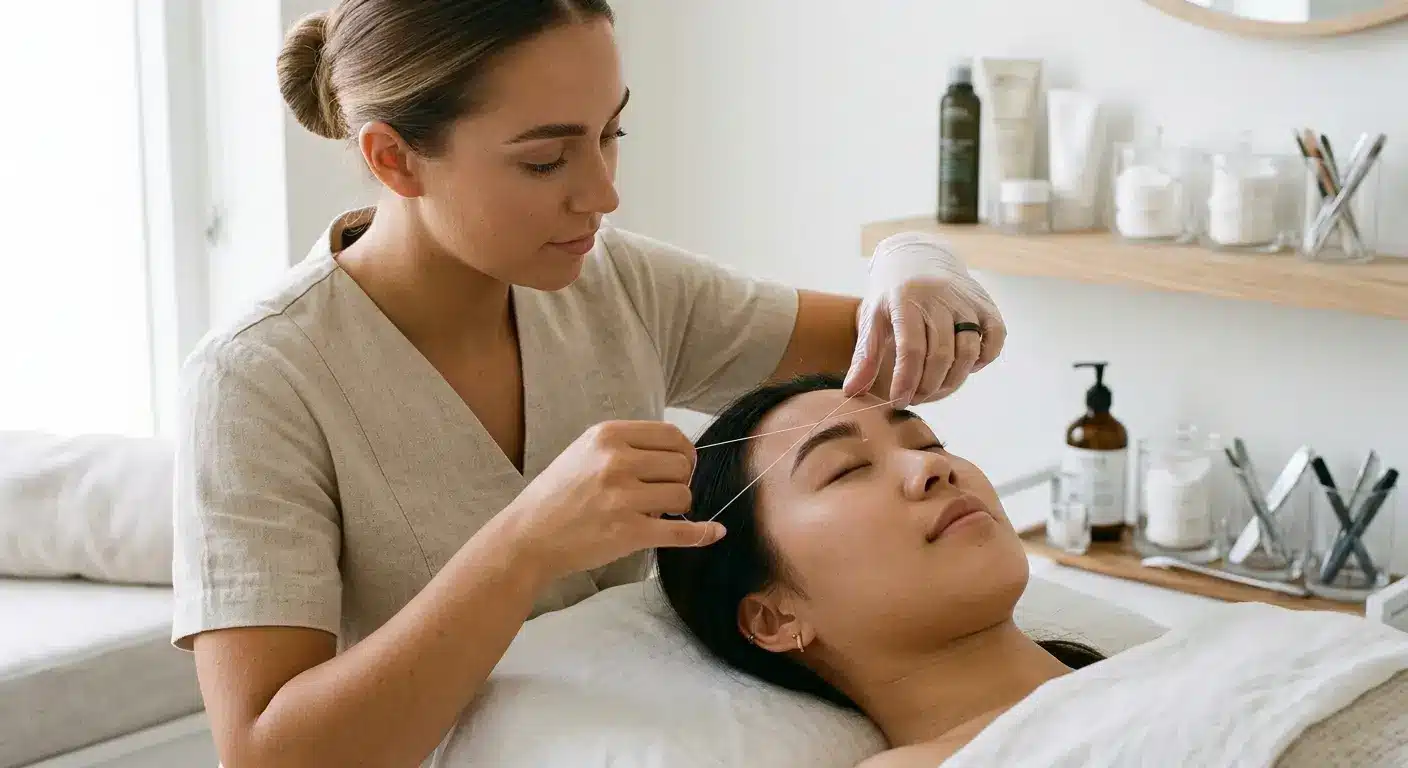
Threading removes hair using a twisted loop of cotton thread that catches multiple hairs at the follicle level.
Nothing is applied to the skin itself — no wax, no chemical strips, no fragrance. For anyone managing rosacea, eczema, or general redness, this alone makes threading for sensitive skin a far more comfortable option.
2. More Precision, Less Trauma to the Surrounding Skin
Waxing removes hair in broad strokes, which means it often pulls at skin well beyond the area you actually want treated.
This is a common cause of unwanted redness along the brow bone or upper lip, even in people who don’t consider their skin especially reactive.
Threading works hair by hair, or in small, controlled sections. A skilled threading specialist can shape a precise arch or clean line without disturbing the wider skin area.
This precision is a major reason threading vs waxing for sensitive skin comparisons consistently favour threading for brow shaping, especially for clients who want sharp, defined results without the surrounding irritation.
It’s also why threading tends to be the preferred method for delicate areas like the upper lip and chin, where skin is thinner and more prone to reacting.
3. Lower Risk of Breakouts and Ingrown Hairs
Waxing pulls hair out at an angle, which can sometimes cause the hair to grow back irregularly, leading to ingrown hairs and small, inflamed bumps.
Combine that with the wax residue left behind, and it’s a recipe for clogged pores — particularly frustrating for anyone who is already breakout-prone.
Because threading doesn’t involve any product residue and pulls hair out cleanly along its natural growth line, it carries a lower risk of ingrown hairs and post-treatment breakouts.
Clients with sensitive, acne-prone skin often find that switching to threading noticeably reduces the small bumps and irritation they used to experience after waxing appointments.
4. Gentler on Thin or Ageing Skin
Skin naturally thins and loses elasticity over time, which makes it more vulnerable to the pulling force of waxing.
This is especially true around the eyes and brow area, where skin is already delicate.
Waxing on thinning skin can occasionally cause bruising, stretching, or even minor skin lifting in more sensitive individuals.
Threading applies far less mechanical stress because it targets the hair itself rather than gripping a wide patch of skin.
This makes it a safer, more comfortable option for older clients or anyone whose skin has become more fragile due to sun exposure, medication, or natural ageing.
5. Longer-Lasting, More Consistent Results With Less Irritation
Because threading removes hair directly from the follicle rather than snapping it partway, regrowth tends to come in finer and more evenly than with waxing.
Many clients find their results last just as long as waxing — typically two to four weeks — but without the redness, swelling, or tenderness that can follow a wax appointment.
This combination of longevity and comfort is ultimately why threading over waxing for sensitive skin has become such a popular choice at Highbrow Beauty Collective.
Clients get clean, precise shaping they can rely on, without dreading the irritation that so often comes with traditional waxing.
How to Prepare for a Threading Appointment
A little preparation goes a long way toward making threading even more comfortable, especially if your skin tends to react easily.
In the 24 hours before your appointment, avoid exfoliating, using retinoids, or applying any active skincare ingredients around the brow and lip area, since these can temporarily thin the skin’s protective barrier and make it more reactive to any form of hair removal, including threading.
It also helps to arrive with a clean face, free of heavy makeup or SPF around the treatment area, so your therapist has a clear view of your natural hair growth pattern.
If you know you have particularly reactive skin, mention it before your appointment starts — an experienced threading specialist can adjust their pace, tension, and technique to suit sensitive or thin skin, rather than using a one-size-fits-all approach.
Staying relaxed also makes a genuine difference. Tension in the face and jaw can make the skin feel tighter and slightly more sensitive during treatment, so a few slow breaths before your therapist begins can take the edge off, particularly if it’s your first time trying threading over waxing for sensitive skin.
Aftercare Tips for Sensitive Skin Post-Threading
One of the underrated benefits of threading for sensitive skin is how little aftercare it actually requires compared to waxing.
Because there’s no wax residue or adhesive left behind, most clients don’t need any special products immediately afterward.
That said, a few simple habits can help sensitive skin settle even faster.
Avoid touching or rubbing the treated area for a few hours, and skip makeup application directly over freshly threaded skin if you notice any mild, short-lived redness.
A fragrance-free, gentle moisturiser can help soothe the skin if it feels slightly tight, and sun protection is always worth applying before heading outdoors, since freshly treated skin can be marginally more sensitive to UV exposure for the rest of the day.
If you experience anything beyond mild, temporary redness — such as prolonged swelling, small bumps that don’t settle within a day, or ongoing discomfort — it’s worth mentioning at your next visit so your therapist can adjust their technique accordingly.
Threading vs Waxing for Sensitive Skin: A Quick Comparison
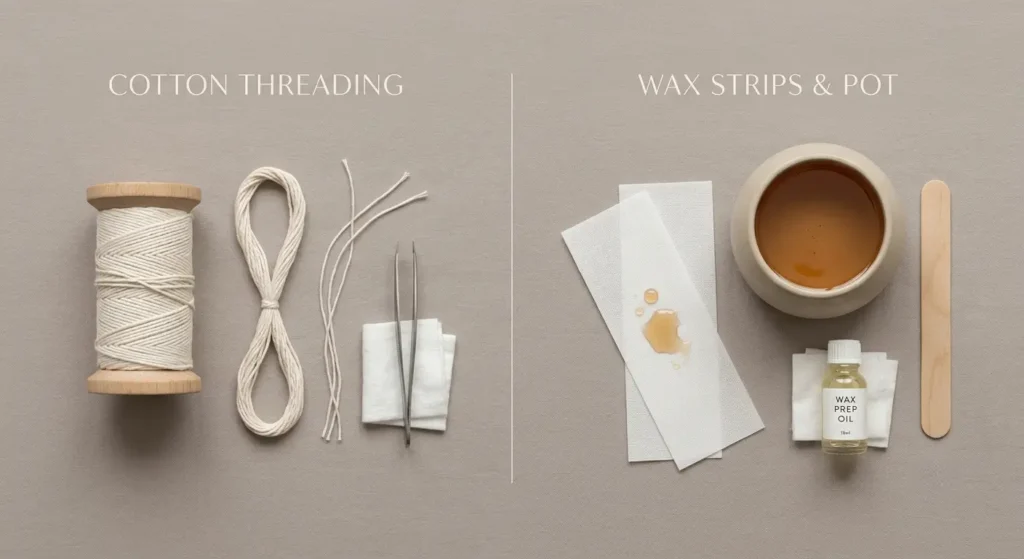
- Contact with skin: Threading — none. Waxing — heat and adhesive applied directly.
- Precision: Threading — hair-by-hair control. Waxing — broader strokes.
- Ingrown hair risk: Threading — lower. Waxing — higher, especially with repeated use.
- Best for: Threading — rosacea, eczema, thin or reactive skin. Waxing — larger areas of resilient skin.
- Typical results: Threading — 2–4 weeks with minimal redness. Waxing — 2–4 weeks with possible short-term irritation.
Is Threading Over Waxing Right for Your Sensitive Skin?
Threading isn’t just a trend — it’s a technique that’s been refined over centuries specifically because it works well on delicate, reactive skin.
If you’ve experienced redness, bumps, or general discomfort after waxing in the past, threading is worth trying for your next brow or facial hair appointment.
That said, everyone’s skin responds differently. If you have any active skin conditions, it’s always worth mentioning this to our specialists beforehand so they can adjust their technique and pace accordingly.
Choosing threading over waxing for sensitive skin comes down to comfort, precision, and results you can trust. From avoiding heat and chemical contact to reducing the risk of ingrown hairs and breakouts, threading offers a genuinely gentler path to well-shaped, defined brows — without the redness and irritation so many people associate with waxing.
If your skin has been telling you it’s had enough of hot wax, it might be time to make the switch.
Ready to experience the difference for yourself? Book a threading appointment with Highbrow Beauty Collective today and let our specialists show you what gentle, precise brow shaping really feels like.
